The next fifteen years of Indian consumption, mapped from the founder's chair.
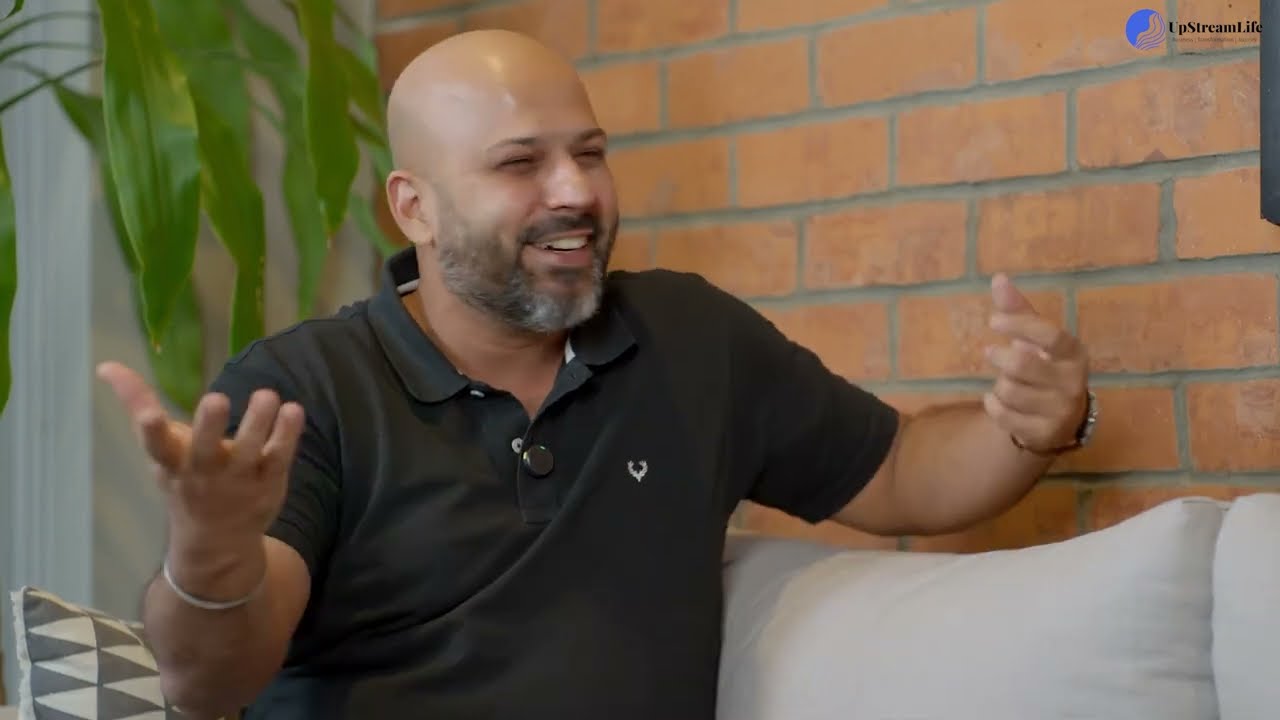
India is not one market. It is three cohorts moving at three speeds: a top five percent that already lives globally, a next twenty-five percent that decides which categories scale, and a bottom seventy that still buys on price. Vinay Singh has spent a decade backing the brands that thread that needle. In this conversation he traces why the consumer story to 2040 is really a story about category sequence, why D2C was never the destination, and why most Indian brands will scale through diaspora before they scale through export.
In sixty seconds.
India's consumer story is usually told as one number: a 1.4-billion market, a rising middle class, a per-capita curve bending toward Brazil. Vinay's argument is that the number is the wrong unit. The right unit is the cohort: a top five percent that consumes globally, a next twenty-five percent that is the swing vote on what scales, and a bottom seventy percent that still meets brand only on the kirana shelf at the lowest price.
Fireside's bet is that the durable winners until 2040 will be founder-led brands that sequence the cohorts correctly: premium first to fund the curve, then mid-tier to win volume, then mass when the category has structurally re-priced. The wrong sequence, mass first to chase scale, kills more brands than it builds.
D2C is not the destination, it is the lab. Modern trade has plateaued. Quick commerce has quietly become the most important shelf in urban India. And the cleanest export wedge for a young Indian brand is the diaspora, not the supermarket aisle in Boston.
Where to land in the conversation.
Each chapter opens the YouTube video at that timestamp in a new tab.
The arc, briefly.
The shape of Indian consumer-brand investing, lined up to the conversation Vinay sketches.
Six ideas to carry into your own work.
Mental models lifted from the conversation that travel beyond consumer-brand investing. Each one is the kind of thing you can quote in a strategy meeting on Tuesday.
The three-cohort consumer
Top five percent: post-scarcity, brand-fluent, prices in global terms. Next twenty-five percent: aspirational, price-aware, the cohort that decides whether a category scales. Bottom seventy percent: still on price-per-gram, still on kirana, still the largest single buyer of FMCG. Most strategy decks collapse them into one. Most failures begin there.
Category creation > category entry
The defensible wins are the brands that did not enter a category. They made one. boAt did not enter "earphones," it made "affordable lifestyle audio." Mamaearth did not enter "skincare," it made "toxin-free for Indian skin." Entering a category is a price fight. Creating one is a vocabulary fight, which is harder, slower, and cheaper to defend.
D2C as lab, not destination
Direct-to-consumer is a discovery surface: fast feedback, clean unit economics on a small base, control of the brand voice. It is not a billion-rupee revenue model in India for most categories. The brands that compounded used D2C to find the SKU, the price-point, the cohort, then ported the answer into modern trade, quick commerce, and eventually general trade.
Premiumisation is a staircase, not an elevator
Categories premiumise in a sequence, not all at once. Edible oils first (twenty years ago). Then atta. Then pulses. Spices are in motion now. Dairy is the next step. The investor's job is to read where on the staircase a category is, and to refuse a premium SKU in a step that has not started yet.
Diaspora before export
The cleanest first foreign market for an Indian brand is rarely "the United States." It is "Indian-Americans on the East Coast." Diaspora is a wedge: cultural familiarity carries the product, the brand learns export logistics on a forgiving customer, and word-of-mouth back to India compounds. Slurrp Farm and Yoga Bar did exactly this. The supermarket aisle in Boston comes later, and only sometimes.
Brand equity as recession insurance
When the cycle turns and category leaders cut spend, the brands with real equity hold price. The brands without it discount. The discounts become the brand. Vinay's view of recession risk in consumer is not about demand (demand for shampoo does not collapse), it is about which brands emerge with their pricing power intact and which have rented their growth.
Fifteen things to actually walk away with.
Each one carries the timestamps where the moment lives, and a transferable note for work that isn't consumer-brand investing.
India is three cohorts moving at three speeds.
Vinay's working diagram of the Indian consumer market splits the population into roughly three bands. The top five percent, call it 70 million people, already lives in a global consumption frame: imported skincare, mid-range European cars, premium private-label coffee, a Dyson at the second home. The next twenty-five percent, around 350 million, is the swing vote: they decide which categories cross from boutique to mainstream. The bottom seventy percent is still the largest line on most FMCG balance sheets, but it meets brand only at the kirana counter and almost entirely on price.
The strategic point is that a deck saying "India is a 1.4-billion-person market" is, in practice, three different decks. The companies that fail at scale are usually the ones that priced for cohort one, distributed for cohort three, and built a team for cohort two.
The next twenty-five percent is the cohort that decides the decade.
The top five percent is too small to make a category. The bottom seventy percent is too price-anchored to fund premium R&D. The middle, the next twenty-five, is the cohort that, once it adopts, lets a brand build the unit economics that eventually serve everyone. The Mamaearth story is the canonical version: priced for the next twenty-five, accessible via D2C to the top five who tried first, eventually available in modern trade and quick commerce at a price the cohort would defend on a household-spend audit.
For an investor, "who is the next-twenty-five customer for this brand?" is the diligence question that separates a category creator from a niche operator. If the brand cannot describe that customer in two sentences (household income, city tier, the moment of need), it is not a category-scale bet yet.
Top cohort mimics global; mid cohort lags by five to seven years.
A specific number Vinay returns to: what the top five percent in India consumes today is what the next twenty-five percent consumes in roughly five to seven years, at roughly forty to sixty percent of the price. The lag is not random. It tracks the staircase of category premiumisation, the depth of modern trade, and now, increasingly, the dark-store SKU mix of quick commerce.
The implication for product roadmap is sharp. A brand serving cohort one in 2026 is reading the cohort-two roadmap for 2032. The opposite of trend-spotting: the trend is already visible, the question is whether the brand will still be solvent when the rest of the country gets there.
The founder-led brand is structurally different from the FMCG operator brand.
The Fireside thesis is not "consumer brands." It is "founder-led consumer brands." Vinay distinguishes them precisely: the founder-led brand has a single point of view about a customer problem, can ship a product in eight weeks instead of eighteen months, can change a SKU on Friday and have it in a dark store on Monday. The operator brand has scale, distribution, and committees. Both can win. Only one is investable at seed.
The examples are the portfolio: Aman and Sameer Mehta at boAt building "affordable lifestyle audio" as a single, almost stubborn idea; Ghazal Alagh at Mamaearth turning her own kid's eczema into a thesis about toxin labels; Suhasini Sampath at Yoga Bar moving from a snack bar to a category. None of them came from FMCG. All of them led with conviction more than category experience.
D2C is the lab. Offline is the factory.
The most-misunderstood line Vinay draws in the conversation. D2C in India, as a standalone channel, does not produce a 1,000-crore revenue business for most categories, because customer acquisition costs on Meta and Google have stopped being subsidised. What D2C does produce is a tight feedback loop: what SKU sells, what claim resonates, which price point holds, which cohort is buying. Those answers, ported into modern trade and quick commerce, are where the revenue actually lives.
Mamaearth, boAt, and Yoga Bar all started D2C-heavy and are now mostly offline by revenue. The D2C share dropped not because D2C failed but because it succeeded at the thing it was good for: discovery. The car came out of the wind tunnel and got on the road.
Quick commerce has rewritten the shelf, and most brands haven't updated their decks.
Blinkit, Zepto, and Instamart did not just compress delivery to ten minutes. They compressed the SKU count from a supermarket's 30,000 to a dark store's 3,000. That number is the entire conversation. A dark store cannot carry your fourth-variant flavour. It can carry one hero SKU per sub-category. The shelf logic of quick commerce is closer to a convenience store with software than to a supermarket. And unlike a supermarket, the algorithm decides what gets shown, not the trade-marketing budget.
For a young brand, this is structurally good: a hero SKU on Blinkit reaches more urban households than a dozen tail SKUs in modern trade. For an incumbent, it is structurally bad: the long tail that paid for shelf-space margin no longer has a shelf to sit on.
Modern trade has plateaued. The growth has moved.
The mid-2010s Indian consumer story was about Reliance Smart, DMart, Spencer's, More. Modern trade was where the next decade of growth was supposed to come from. Vinay is direct: modern trade store count growth has flattened, same-store-sales growth has slowed, and the urban customer the format was designed for is doing weekly top-ups on Zepto and the heavy haul on a quarterly run to DMart. The trade is bifurcating: value runs on DMart, frequency runs on quick commerce, and modern trade in between is being squeezed.
This is not a forecast; it is already in the numbers. For a brand, it means trade-marketing budgets that assumed modern trade as the primary growth engine need to be rewritten, often by a factor of two.
Premiumisation runs in a category sequence: oils, atta, pulses, spices, dairy.
The most useful single map in the conversation. Indian premiumisation has not happened across the kitchen at once; it has crawled, one staple at a time. Edible oils premiumised first, twenty years ago, when Saffola taught the country to pay a multiple for "health." Atta followed, with Aashirvaad and the multigrain SKUs. Pulses are in mid-premiumisation right now: organic, branded, pre-sorted. Spices are early-premiumisation, the wave that small brands like Pure & Sure and even Tata Sampann are riding. Dairy is the next staircase.
The investor's filter falls out cleanly: a brand pitching a premium SKU in a category one or two steps before its own premiumisation wave has good marketing and bad timing. A brand pitching exactly into the wave has the wind. The categories sequence; the wind doesn't blow on all of them at once.
The diaspora is the export wedge, not the supermarket aisle.
Indian brands that try to enter Whole Foods or Tesco directly tend to learn an expensive lesson in distribution. The brands that scaled abroad first did it through the diaspora: Patel Brothers in New Jersey, Cash & Carry in Houston, the Asian grocery shelf in London. Slurrp Farm's millet noodles found NRI parents before they found mainstream parents. Yoga Bar's protein bars reached Indian-American gyms before they reached generic American ones.
The structural reason: diaspora customers carry a cultural premium for the brand, forgive the early logistics, and produce word-of-mouth back into India that compounds at home. Cracking the mainstream Western customer comes later, and for most brands only after the diaspora wedge has paid for the rounds in between.
Indian-language packaging is a moat almost no one prices in.
A small detail with a large compounding effect. The bottom-seventy cohort, and large parts of the next twenty-five, reads claims more easily in a vernacular than in English. Brands that put Hindi, Tamil, Marathi, Bengali on the front of pack reach a customer who, in research, will tell you English is "fine" and then, in store, will not pick up the SKU. The cost is a packaging redesign. The return is a measurable lift in tier-2 and tier-3 conversion.
The reason almost no D2C brand does it for the first three years is that the founder team is cohort-one English-speaking, and the design agency is too. The brands that grew past 500 crore in revenue almost all did the vernacular pack at some point. The ones that didn't, stalled.
GST 2.0 changes the unit economics on a long list of consumer SKUs.
The September 2025 rate rationalisation, which collapsed the four-slab structure toward 5 and 18 percent for most consumer categories and set a 40 percent demerit slab for tobacco and aerated drinks, is doing more for consumer-brand margins than any single marketing innovation in five years. Personal care SKUs, packaged foods, and a long tail of household items have re-priced downward at the shelf or upward at the margin, depending on whether the brand chose to pass through.
For Fireside's portfolio, the decision is now: pass through and buy share, or hold and buy margin? Vinay's view is that brand-equity brands hold margin and let the volume come on the cohort trend; share-grabbers pass through and run hotter. Both can be right. The choice is the strategy.
GenZ does not buy what their parents bought, and they do not buy it the same way.
The cohort entering peak earning years between 2030 and 2040 is structurally different, not just younger. They will not pay for a brand whose only claim is "trusted for fifty years" because, as Vinay puts it, fifty years is not a benefit to them. They will pay for ingredient transparency, founder voice, and a payment flow that doesn't ask them to switch apps. They discover product on Instagram Reels, not on television, and they validate it on a WhatsApp group with five friends before they buy.
The implication for brand-building: the SKU has to be social-native at design time, not at marketing time: the packaging is content, the unboxing is the ad, and the brand is the founder's face on a thirty-second clip. The brands assuming this will be cosmetic are the brands that will quietly lose share through the back half of the decade.
boAt's path is the case study of category-creation, not category-entry.
Vinay treats boAt as the cleanest illustration of the Fireside thesis. When the brand started, "premium earphones" in India meant Sony or JBL; everything else was a price-fight at the bottom. Aman and Sameer Mehta did not enter that fight. They wrote a new vocabulary ("lifestyle audio at an Indian price") and ran cricket-themed sponsorships and an unmistakably Indian voice that no global brand could imitate without losing its own. The IPO story has been imperfect and is still being written. The point Vinay holds onto is the playbook, not the price-print: category created, founder voice, channel pluralism, and a brand promise that did not require a global reference.
The portfolio learning sits underneath: the brands worth backing are not the ones racing toward an existing leaderboard, they are the ones writing a new leaderboard the existing leaders cannot enter.
Mamaearth's IPO was not the validation; the category was.
When Honasa Consumer, Mamaearth's parent, listed in November 2023, the financial press treated the IPO as the moment Indian D2C "arrived." Vinay's framing is more conservative and, in retrospect, more accurate. The validation was not the listing; the validation was that "toxin-free for Indian skin" became a category vocabulary that ten brands now compete inside. The IPO was the harvest. The category creation was the bet.
The post-IPO share-price story since 2024 has been bumpy, and Vinay does not dodge it: a public market is a different audit than a private one. A brand that built on category creation has to learn quarter-by-quarter discipline. Both can be true at once.
The 2040 number Vinay actually believes is per-capita-GDP, not population.
The conversation closes on what Vinay treats as the only macro variable that matters for consumer brands over the next fifteen years. The population number is roughly fixed. The economy will be roughly the third-largest in the world by 2030. The variable that decides whether categories premiumise or stall is per-capita GDP, and whether the next-twenty-five cohort moves from roughly $4,000 today toward $10,000 by 2040. If it does, every category on the staircase moves one step up. If it stalls, premium brands stall with it.
The framing is unsentimental and useful: do not buy the population story, buy the per-capita story. Track the wage growth in tier-2 cities, the formalisation of the workforce, the GST-input-credit ladder for small merchants. These are the leading indicators. Population is the trailing one.
What the episode measures.
Every figure below was said on air. Timestamps open the video at the moment it lands.
India as three cohorts, not one market
Premiumisation is a staircase, not an elevator
The shelf that quick commerce shrank
D2C is the lab; offline is the factory
Lines worth keeping near your desk.
The jargon, unpacked.
Some of these will be obvious; some won't. Skim, mark the unfamiliar, come back later.
Three angles on Monday morning.
If you don't run a consumer brand, here's what to take.
If you're a founder
- Name your cohort. Top five, next twenty-five, or bottom seventy, and write the two sentences describing them before the next board meeting.
- Treat D2C as your research instrument. Optimise it for SKU and claim signal, not GMV. The real revenue lives in modern trade and quick commerce.
- Pick one hero SKU per sub-category for quick commerce. The dark store will not carry your fourth variant. Plan around that, not against it.
- If you're going abroad, start with the diaspora. Indian-American East Coast first; mainstream Whole Foods later, only if the brand earns it.
- Put Hindi or your largest tier-2 language on the front of pack by the time you cross 100 crore. Nearly every brand that grew past 500 did.
If you're an investor
- Diligence question: "Which step of the premiumisation staircase is this category on, and is the brand pitching the step or the destination?" Refuse the destination pitch.
- Ask the founder to describe the next-twenty-five customer in two sentences. The clarity of the answer is the diligence.
- Track inbound diaspora traction as a leading indicator of export-readiness. A brand growing on NRI word-of-mouth is two years ahead of a brand pitching Boston.
- Read the cycle. After GST 2.0, the brands that hold margin and ride the cohort trend separate from the brands that pass through and buy share. Both can win, on different clocks.
If you're a brand operator
- Rebuild your trade-marketing budget with modern trade flat and quick commerce doubling. The previous mix is structurally out of date.
- Audit your SKU portfolio against the 3,000-SKU dark-store constraint. Anything that is not a hero or a clean tier-2 belongs in modern trade or general trade, not on Blinkit.
- Map your category's premiumisation step honestly. If you're a step early, hold cash. If you're on it, spend.
- Build a vernacular front-of-pack track parallel to the main packaging refresh. The tier-2 lift is measurable and the cost is small relative to the return.
The whole conversation, searchable.
Click a timestamp to open YouTube at that moment. Click any line to highlight it (yellow). Highlights and notes save in this browser only.
00:00 in the page to seek.