Episode 127 · Capital · 57 min

The introduction is the investment

NuVentures has stopped competing on cheque size and started competing on access: the 30 to 40 US enterprises its sister IT services firm has served for two decades, and the roughly 120 CIOs and CISOs inside them. The arithmetic behind the pivot is brutal — one of those CIOs fields 40 to 45 cold pitches a day from Indian SaaS startups and takes none of them. Venk Krishnan's claim is that in enterprise AI, distribution is the scarce asset and money is not.

VK
Venk Krishnan
Founder, NuVentures & NuWare, NuVentures · with Vishal Krishna
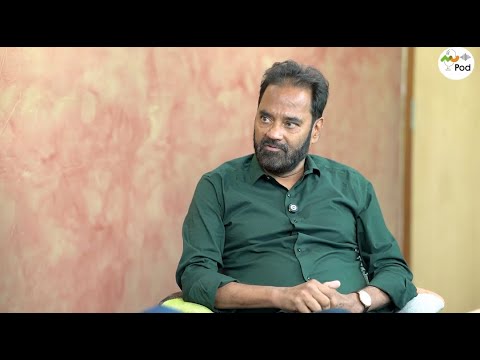
The introduction is the investment — episode thumbnail
57:27
Said in this episode
▶ 4:47
30–40
US enterprises NuWare serves
Krishnan's IT services company has 30 to 40 US customers who depend on it for mission-critical applications — the asset NuVentures now lends to its startups.
▶ 6:03
~120
C-suite decision makers within reach
The host's on-air arithmetic, which Krishnan endorses: 30 to 40 customers implies roughly 120 CIOs and CISOs a portfolio founder could be introduced to.
▶ 10:37
40–45/day
Cold pitches one US CIO fields
A single CIO told Krishnan he gets 40 to 45 calls a day from Indian SaaS startups, has no way to vet them, and prefers warm introductions.
▶ 10:07
25%
Sales drop that opened the door
The US retail customer that ran a paid proof of concept with Zigment had seen sales fall 25% — the pain that made the introduction land.
▶ 46:17
$5–10M
Revenue the founder should sell alone
Krishnan's rule of thumb: the founder personally does the first five to ten million dollars, or lands at least ten nameable long-term contracts, before hiring a sales team.
▶ 18:06
55
Raga AI's team, US-headquartered
Its founder describes going from a few ideas at a coffee shop to two funding rounds and a 55-person team split between the US and Bangalore, with customers in the US, India and Europe.
The brief

The argument in sixty seconds

Krishnan's claim is that early-stage capital in India has become a commodity and customer access has not. There is plenty of dry powder and a FOMO-driven scramble for good founders, so a decade-old fund that once did exactly what every VC does — take the meeting, ask for the metrics, add nothing — has rebuilt itself around the one asset money cannot buy: the 30 to 40 US enterprises that depend on his IT services company NuWare for mission-critical work, and the CIOs and CISOs inside them. The reason it matters is a number he heard from one of those CIOs, who fields 40 to 45 calls a day from Indian SaaS startups, has no way to tell which of them can deliver, and therefore only entertains warm introductions. NuVentures now underwrites that introduction and watches what happens: Zigment walked into a US retailer whose sales were down 25% and walked out with a paid proof of concept; Raga AI's reliability pitch was stress-tested by a customer's heads of data security and AI before the product was finished; Pivot Robotics is being aimed at Coimbatore's manufacturers. The corollary is an unfashionable message to founders — stop selling the model, learn the domain, move to the market you sell to, do the first five to ten million dollars yourself — and a warning that the next two years will separate the VCs who have operated from the ones quoting books.

Worth your time if you are

Indian B2B SaaS founders trying to crack the US
Seed-stage founders choosing between identical term sheets
New fund managers hunting for a differentiation beyond price
AI founders who lead with the model instead of the problem
Operators wondering what a VC is actually for
Episode map

Where the conversation travels

Every block is a chapter, coloured by what it's about. Click any of it to jump straight to that minute on YouTube.

01A decade of bets, and a new avatar 0:00 Vishal frames NuVentures as a ten-year-old early-stage firm behind Mu Sigma, DailyNinja, Pocket Aces and Third Wave Coffee, and Krishnan retraces his 2002 return from the US to the walk-in at a Third Wave cafe where he asked a barista for the founder's number. 02AI is the buzzword; relationships are the moat 3:15 After two slow years, everything is AI and SaaS and nothing gets funded without an AI in it — so instead of chasing the frontier, Krishnan decides to play the strength he actually owns: twenty years of US relationships and NuWare's 30 to 40 enterprise customers. 03Dry powder, FOMO and the value-add question 5:02 India's investing scene runs on fear of missing out and there is plenty of dry powder, so Krishnan's question becomes the only one worth asking — what do you bring other than money — and his answer is a seat in front of roughly 120 C-suite decision makers. 04The door that does not open for founders 7:05 Enterprise sales cycles are long and the meeting you can get is always with someone below the decision maker, a lesson Krishnan learned running a government-software company he founded around 2000, which is why an introduction to the person who signs is the whole game. 05A paid POC, and 45 pitches a day 9:06 Krishnan takes Zigment's three-time founder to a US retail customer whose sales had fallen 25%, and it converts into a paid proof of concept — because that CIO gets 40 to 45 calls a day from Indian SaaS startups and only trusts warm introductions; Mantis gets a similar route to a conglomerate CFO. 06Raga, Pivot Robotics, and a VC's confession 11:58 Raga AI's founder is taken to a decision maker who pulls in his heads of data security and AI to critique the roadmap, Pivot Robotics' Carnegie Mellon founders are pointed at Coimbatore manufacturers, and Krishnan admits that what VCs including him used to do was ask for metrics and add nothing. 07The founders, on the record 16:19 Cut to portfolio founders describing their own products — Mantis on revenue forecasting for consumption businesses, Zigment on AI sales orchestration for insurance and healthcare, Raga AI on making LLMs reliable with a 55-person team split between the US and Bangalore. 08What US access actually buys 19:20 One founder describes a C-level meeting in New York with one of the largest asset managers — next to impossible for an early-stage startup — another a month-long US trip built on NuVentures' address book, and a solo founder explains why network plus product help beat a bigger cheque. 09Beyond introductions: product, hiring, credibility 22:30 A NuVentures hand spends two months on daily and weekly calls evaluating a critical new module and helping hire freelancers, founders learn that a single enterprise contains ten different customers, and the fund's own credibility travels — we work with Raga, we know your systems. 10GTM is domain knowledge, not technology 27:00 Vishal offers technology as the differentiator and Krishnan flatly disagrees: LLMs and SLMs are conduits, buyers have business problems, and founders who understand how asset managers grow AUM will beat the ones who can only talk architecture — which biases him toward experienced founders. 11Go live where you sell 30:30 SaaS sales inside India are negligible so everyone chases the US, and Krishnan's condition for backing them is physical presence plus domain schooling — founders sit with NuWare people who have spent 15 to 20 years inside regulated healthcare and financial services before they meet a customer. 12Generative AI and the commodity robot 33:00 AI is here to stay but generative AI rewriting emails and making pictures is, in his words, a long way from helping a business — the better example is Pivot Robotics asking whether one robotic hand can do ten or fifteen jobs instead of the single task that turns any robot into a commodity. 13The portfolio as a pain-point pipeline 36:40 Once a customer is happy, word of mouth compounds and the customers themselves want the startup to grow beyond them — so a fixed-income problem raised by one US client yesterday becomes an introduction today, and validation, not code, becomes the thing being manufactured. 14Why a tech investor keeps buying D2C 39:20 Krishnan defends his consumer bets — a packaged Indian-food brand he thinks could be a youthful MTR after seeing it stacked in a US Indian grocery, Foxtale's skincare founder who has raised three rounds since, and Influencer Garage, which he cross-introduces to his own portfolio. 15Be where the customer is: the first ten million 43:40 His trend list is short and unglamorous — AI is an enabler, value is the only currency with an enterprise buyer, the founder should personally sell the first five to ten million dollars or land ten nameable reference customers, and India-centric ideas must answer who actually pays. 16Too many VCs, a correction, and three dogs 48:20 Krishnan calls out young investors running on bookish knowledge and heirs who go straight from college to a fund expecting two blockbusters in ten, predicts a two-year reckoning where paper unicorns stop counting, tells founders to ask a VC where they will be taken — then closes on dogs, the present moment and Sapiens.
Takeaways

Ideas to carry out of this hour

01

Capital is commoditised; the customer meeting is not

Krishnan's read on India is that there is no shortage of money for a good idea — plenty of dry powder, and a fear-of-missing-out scramble that pushes cheques at founders. What almost nobody supplies is the second half of the job. His answer is to stop pretending the fund is differentiated by taste and instead lend startups the only asset that took twenty years to build: the US enterprise relationships behind NuWare, and the CIOs and CISOs those accounts open. He is explicit that this is a correction of his own past behaviour.

02

The scarce resource in enterprise SaaS is a warm introduction

One US CIO told him he gets 40 to 45 calls a day from Indian SaaS startups. He has no time, and more importantly no way to judge from a cold pitch whether any of them can do what he needs — so he only works with companies that arrive through someone he trusts. That single sentence is the whole investment thesis: the bottleneck is not the product, the pricing or even the pitch, it is credibility transfer, and a fund that owns the relationship can manufacture it on demand.

03

Sell the business problem; the model is a conduit

Krishnan openly disagrees with the host's suggestion that technology is what wins. Indian founders, he says, walk into rooms talking about LLMs, SLMs and knowledge graphs, when the buyer wants to know how his assets under management grow or his process gets cheaper. People who can write the code are a dime a dozen — a smaller college in New Jersey teaches the same syllabus as Stanford — so the durable edge is domain fluency, which is also why he leans toward founders with a decade or more inside an industry rather than students straight out of college.

04

If you sell to America, live in America

SaaS sales inside India are close to negligible, so almost every Indian B2B startup is really a US company with an Indian engineering team — and Krishnan insists the founder physically move there, because in early-stage enterprise sales the founder is the salesperson and relationships do not survive a call from Bengaluru. His threshold is concrete: do the first five to ten million dollars of revenue yourself, or at minimum land ten long-term contracts you can name, even small ones, before you hand selling to anyone else.

05

Generative AI is not yet a business case

Asked about the elephant in the room, Krishnan refuses the hype on both sides. AI is permanent and anyone who ignores it will be left behind, but generative AI as currently sold — rewriting your emails, generating images — is in his words a long way from helping an enterprise. The version he funds is narrower and duller: AI used to make a known process more efficient or a product less replaceable, like Pivot Robotics asking whether a robotic arm built for one task could do ten or fifteen, because the single-task robot is a commodity and commodities lose.

06

A portfolio company is also a sales lead

Because the fund sits on live enterprise accounts, pain points arrive before pitches do. A client raises a fixed-income problem one day and NuVentures is arranging a meeting for a portfolio startup the next, having first coached the founder on what the pain actually is. The by-product is speed of validation — the founder learns whether the concept holds, and can pivot on a real signal rather than a survey — and the same logic runs inside the portfolio, where a skincare brand is handed an influencer-ratings startup to test.

07

The reckoning is coming for funds, not just startups

There are, Krishnan says, too many VCs in India who do not provide the value they claim — young managers running on bookish knowledge who have never sold anything, and children of business families who go from a US degree straight to a fund on the theory that two out of ten investments will be blockbusters. He expects the next two years to expose them when LPs ask what came back, and notes that plenty of 2021 unicorns are no longer unicorns because a valuation is not money out. His advice to founders is symmetrical: do not just take the cheque, ask where it will take you.

The numbers, drawn

What the episode measures

Every figure below was said on air — timestamps included, caveats kept.

Conversation share

portion of the hour spent on each theme
Venture capital · 24%Sales, GTM & growth · 22%SaaS & enterprise · 15%AI & machine learning · 14%D2C & commerce · 10%Founder journey · 8%
Venture capital24%
Sales, GTM & growth22%
SaaS & enterprise15%
AI & machine learning14%
D2C & commerce10%
Founder journey8%
Computed from the chapter map of this episode.

What an IT services book buys a founder

count
US enterprise custom40C-suite decision mak120
As stated on air: 30 to 40 US customers (upper bound shown), which the host converts to roughly 120 CIOs and CISOs and Krishnan accepts — he never itemised the list himself.▶ 6:03

The portfolio maths Krishnan warns against

of 10 investments
Expected blockbusters · 20%Everything else · 80%
Expected blockbusters20%
Everything else80%
His caricature of the newest entrants — out of ten investments two will be a blockbuster and I will make a lot of money — offered at 50:46 as the reason inexperienced investors skip the operating years.▶ 50:46
Worth keeping

Lines that stay

What is the value add other than money you can bring in? Today startups have a lot of opportunities to get money if they have the right idea — there is a lot of dry powder, as they say.

— Venk Krishnan ▶ 5:17

On a regular day I get about 40 to 45 calls from Indian SaaS startups. I have no time, and no way to figure out if these guys can do what I want — so I would prefer to work with companies who come through a warm introduction.

— Venk Krishnan, quoting a US CIO ▶ 10:55

If you go to a decision maker in any company, he is not going to ask what you are doing with technology. He is going to ask how you are going to solve my problem.

— Venk Krishnan ▶ 29:33

AI is just an enabler. AI is not going to solve it for you — you should use AI to solve those business problems.

— Venk Krishnan ▶ 31:15

I can say one is a unicorn, but unless you get money out of it, it is not a unicorn. There are a lot of unicorns from 2021 which are no longer unicorns.

— Venk Krishnan ▶ 53:51
Clips that travel

Short on time? Start here

Indian SaaS founders cold-emailing US CIOs

The paid POC and the 45 pitches a day

The episode's proof point: a retailer down 25% on sales, a founder flown in, a paid proof of concept — and the CIO's own explanation of why cold outreach never works.

9:06 → 11:58 · 3 min ▶ Watch clip
Founders deciding which term sheet to sign

Raga, Pivot Robotics, and a VC's confession

Three portfolio introductions dissected, then Krishnan admits what venture capital including him used to do — ask for metrics and add nothing.

11:58 → 16:19 · 4 min ▶ Watch clip
Solo founders weighing network against valuation

What the access was actually worth

Portfolio founders speak for themselves: a C-level meeting in New York with a huge asset manager, a month-long US trip, and why an early-stage startup cannot open that door alone.

19:20 → 22:30 · 3 min ▶ Watch clip
AI founders who lead with the architecture

GTM is domain knowledge, not your model

The sharpest disagreement in the conversation — the host argues technology, Krishnan argues domain, and lands on why he backs founders with industry years behind them.

27:00 → 30:30 · 4 min ▶ Watch clip
LPs, emerging managers and founders raising now

Too many VCs, and the correction coming

Bookish young funds, heirs who skip the operating years, advice given by people who never sold anything, and a two-year reckoning where paper unicorns stop counting.

48:38 → 53:20 · 5 min ▶ Watch clip
Glossary

The jargon, unpacked

GTM (go-to-market)
How a company actually reaches and sells to customers — which Krishnan argues is domain understanding and access, not the technology in the product.
Warm introduction
An introduction to a buyer from someone that buyer already trusts, which is the only kind the CIO in this episode says he entertains.
Proof of concept (POC)
A small, time-boxed deployment an enterprise runs before committing — sometimes paid, as in the retail engagement Zigment won, which makes it both revenue and validation.
Reference customer
A named client a startup can cite when selling to the next one; Krishnan wants ten long-term contracts a founder can name, even at small values, before a sales team is hired.
ARR
Annual recurring revenue, the standard subscription-business metric — the thing Mantis exists to track and forecast for consumption-based companies.
Dry powder
Committed fund capital not yet invested; the glut of it in India is why Krishnan says money alone is no longer a differentiated offer to founders.
LLM / SLM
Large and small language models — the terms Krishnan says Indian founders lead with in enterprise meetings where the buyer only wants to hear about a business problem.
Power law
The venture assumption that a couple of investments in ten return the whole fund; Krishnan treats it as an excuse inexperienced investors use to skip operating experience.
Connections

If this resonated, go here next

Full transcript

The whole conversation, searchable

221 segments

Auto-generated captions, lightly cleaned. Click a timestamp to open that moment on YouTube.