Episode 162 · Deep tech · 32 min

The moat that outlasted the licence

India's corporate R&D deficit is a design flaw, not a cultural one: when a manufacturing licence was the only moat worth holding, a laboratory was pure cost. The counter-case is a 1957 vegetable-oil forecast, right to within thirty days, that still leaves Hindustan Lever the country's number-one soap maker seventy-five years on. The fix both speakers land on is the deep science startup as the translation layer neither industry nor academia will build alone.

GA
Gurumurthy and Nataraj
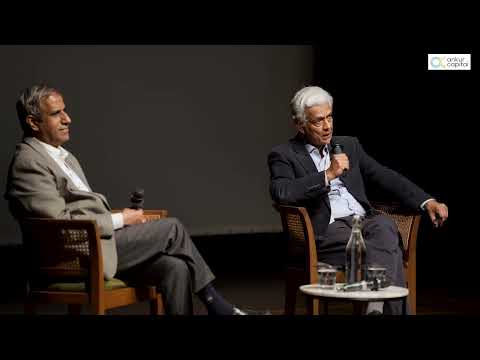
Director, FSID at IISc, in conversation with a 30-year Hindustan Unilever veteran, Foundation for Science Innovation and Development, IISc · with Vishal Krishna
The moat that outlasted the licence — episode thumbnail
31:36
Said in this episode
▶ 4:04
under 20%
Big industry's share of India's R&D spend
Nataraj's own estimate on air — he doubts it reaches 30% and expects it is well under 20%, with pharmaceuticals the standing exception.
▶ 9:36
300% to 30-40%
Excise duty on some Hindustan Lever products
Punitive rates of nearly 300% in the 1970s and 80s fell to manageable levels after liberalisation, which he credits for almost exponential growth in consumption.
▶ 7:36
75 years
How long one 1950s research bet has held
The oils processes developed then gave Hindustan Lever a virtual monopoly in soaps by the 1970s; it is still the number-one soap maker in the country.
▶ 11:46
10%+
Generic pharma R&D as a share of topline
The exception that proves the rule: pharma companies invest heavily and employ recent academicians who can actually hold a conversation with a lab.
▶ 27:24
2 to 1
US Small Business Administration match, 1958
As described on air: for every dollar of private financing a small company raised, the agency put in twice the amount — the jump Gurumurthy credits for Silicon Valley.
▶ 21:24
90 million
Products from one micro-manufacturing machine
Unilever's microfluidics-based instant-availability machine made shampoo or ice cream to specification on site — and never saw the light of day.
The brief

The argument in sixty seconds

Nataraj's claim is that India's thin corporate R&D is a policy artefact, not a national temperament. Capital was scarce at independence, so the state took the funding role and handed private manufacturers licences instead — and in a seller's market where you waited three years for a car, a licence was a better moat than any laboratory. He puts big industry's share of national R&D at well under twenty per cent, with pharma the standing exception, and offers a counter-example he lived inside: Hindustan Lever's outgoing British chairman predicted in the 1950s that India would flip from vegetable-oil exporter to importer by the mid-sixties, was right to within thirty days, and got a research centre built in Andheri that upgraded rice bran, karanja, sal, kusum and neem — oils previously burnt only for light — into soap. Instruments could not be imported, so the lab built its own gas chromatographs; one ended up at IISc, where Nataraj used it as a PhD student in 1972. Seventy-five years on, that stack of processes still leaves Hindustan Lever the country's number-one soap maker, while the licence-holders were washed out by liberalisation. Gurumurthy's half of the argument is institutional: CSIR was designed as exactly the translation agency India needed and the country blew it, academia is scored on publications while industry is scored on getting a product out the door, and India has only ever received technology shrink-wrapped, so nobody learned to do product development from first principles. Both land in the same place — the deep science startup as the de-risking layer, funded the way microwave valley was, by a government that stops pretending the West did it alone.

Worth your time if you are

Deep science founders stuck between an incubator and an industry contract
Corporate R&D heads who have only ever bought technology shrink-wrapped
Policy people who believe Silicon Valley funded itself
Academics now told to name an industry partner on every grant
Episode map

Where the conversation travels

Every block is a chapter, coloured by what it's about. Click any of it to jump straight to that minute on YouTube.

01The question nobody in India answers 0:00 Prof. Gurumurthy is introduced as an engineer who has founded a company and now runs FSID at IISc, the body that brokers institute science into the corporate world — and the session opens on an audience question: why does Indian industry spend so little on R&D? 02Scarce capital, state factories, manufacturing licences 1:27 At independence the country was strapped for capital, so a socialistic pattern of development put the government in the funder's chair — public sector undertakings from space down to soap — while private manufacturers had to obtain licences, making the licence itself the main source of competitive advantage. 03A seller's market has no reason to innovate 2:51 With everything else controlled and supply short — a three-year wait for a car — there was zero incentive to innovate and quality was never a consideration, which is why Nataraj doubts big industry accounts for even 30% of India's R&D spend and expects the true figure is well under 20%. 04Turner's oil forecast, right within 30 days 4:26 Hindustan Lever's outgoing British chairman Stephen Henry Turner saw in 1957 that population growth would turn India from a net exporter of vegetable oils into a net importer by the mid-sixties, was right plus or minus thirty days, and persuaded Unilever's special committee to fund a research centre in Andheri. 05Minor oils and home-built gas chromatographs 6:18 Rice bran, karanja, sal, kusum and neem — seed oils traditionally burnt only for light — were upgraded through deoiling, degumming, dewaxing, distillation and saponification and scaled at the Bombay and Garden Reach factories, and because instruments could not be imported the lab built its own gas chromatographs, one of which Nataraj used at IISc in 1972. 06Matchboxes, monopoly and a 300% excise 7:52 By the 1970s those processes gave Hindustan Lever a virtual soap monopoly it still holds, which is Nataraj's proof that technology is the most durable competitive advantage even in making a matchbox — while liberalisation cut punitive excise of nearly 300% to 30-40% and washed out the firms whose only asset was a licence. 07Railway lines: two languages, no translation 9:52 The more fundamental the science, the greater the risk in reducing it to practice, and most Indian companies lack the scientific temper to hold the conversation — generic pharma, investing 10% or more of topline and employing former academicians, is the exception that proves it. 08CSIR was the bridge; India blew it 12:46 Gurumurthy credits the founders for designing the CSIR lab system as a translation agency between academia and industry, calls the plan brilliant on paper and its execution a big-time failure, and adds his own pet peeve — that education policy fixated on higher learning and ignored the polytechnics. 09Publications versus products out the door 14:34 Until about a decade ago industry-academia contact meant consulting, characterisation and certification testing, because the incentive systems diverge — but grant funding now requires industry participation and IISc's own history, from the Mysore Sandal factory to a silicon wafer sliced in its labs, shows the seedlings were always there. 10De-risking, Balaram, and the skin-colour gene 17:44 Industry runs on predictability and annual targets, so anything disruptive gets examined to death; Nataraj traces his return to IISc through conversations with Prof. Balaram and back to a circa-2000 Unilever project with human-genome authors that identified the gene conserved from zebrafish to man which governs skin colour — knowledge that never became a product. 11The machine that made 90 million products 20:39 Around 2000 Unilever ran collaborations with some twenty startups, mostly in the Bay Area, including a microfluidics-based instant-availability machine that would make a shampoo or an ice cream to specification on the factory floor — upwards of 90 million individual products from one machine, and it never saw the light of day. 12Startups as the missing link 22:00 Nataraj states his conviction that startups are the medium through which Indian industry will finally embrace technology, and Gurumurthy adds the capital reality — for deep science the most amenable outcome is strategic corporate investment or acquisition, because the runway to put the technology in customers' hands exceeds what the market funds today. 13Before Silicon Valley there was microwave valley 25:08 Industry does not invest because it has never had to, having always received technology shrink-wrapped — and Gurumurthy argues the government undersells its own role by copying a Western model that never existed, since Silicon Valley ran on two decades of Cold War defence money and a 1958 Small Business Administration multiplier of two dollars for every private dollar. 14Instruments nobody can own alone 27:55 Government money has put sophisticated characterisation instrumentation inside Indian academic institutions that no startup and few industries could ever afford, which is why Nataraj defines an ecosystem as discrete parts that are interdependent rather than anyone owning everything. 15Green hydrogen, Time Square and the Mittelstand 29:09 A founder making green hydrogen from hydrogen sulfide asks where companies too big for incubation and too small for industrial collaboration fees should go, and Gurumurthy points to FSID's third bucket — faculty matchmaking with the SME funding about 20%, plus a government-backed 80/20 or 75/25 cohort model on thematically coherent product spaces.
Takeaways

Ideas to carry out of this hour

01

The licence was the moat, so the laboratory was a cost

India's post-independence policy answered a real constraint — there was almost no capital — by making the state the principal funder and rationing private manufacturing through licences. The predictable consequence is that obtaining the licence became the competitive advantage, and in a seller's market where a car took three years to arrive, nobody had to make a product that was reproducible, usable or innovative. Nataraj's estimate is that big industry does not account for even 30% of India's R&D spend, and probably well under 20%.

02

One research bet in 1957 still holds the number-one position

Stephen Henry Turner, Hindustan Lever's last British chairman, forecast on his way out that India would flip from net exporter to net importer of vegetable oils by the mid-sixties, and was right to within thirty days. The research centre he argued for upgraded minor oils — rice bran, karanja, sal, kusum, neem, previously burnt for lighting — through deoiling, degumming, dewaxing and saponification, then scaled them in the Bombay and Garden Reach factories. By the 1970s rivals could not match the processes; seventy-five years later Hindustan Lever is still India's number-one soap maker.

03

India designed the translation layer and then let it fail

Gurumurthy's correction to the usual licence-raj story is that the same government also built the CSIR lab system as a deliberate bridge from academia to industry — brilliant on paper, and blown big time in practice. He pairs it with a second design error: fixating on institutions of higher learning while ignoring the polytechnics that would have carried technology down to the shop floor. Beneath both sits an incentive mismatch nobody costed — academia is scored on publications, industry on getting a product out of the door.

04

Startups are the de-risking layer industry will not build for itself

Industry is organised around predictability: annual targets, shareholders expecting them met, and therefore very long looks at anything disruptive. The more fundamental the science, the greater the risk of reducing it to practice, so someone has to absorb the intermediate step. Both speakers nominate the startup — it carries the early risk, and because it comes from a research background but has to survive in business, it is fluent in both languages where industry and academia run like parallel railway lines.

05

For deep science, the realistic exit is a corporate one

Gurumurthy is blunt about the capital arithmetic: the runway needed to carry a deep science technology all the way into customers' hands is beyond what the Indian market currently invests. That makes strategic investment by a corporate venture arm, or outright acquisition, the outcome most amenable to both sides — the startup gets the balance sheet it needs, and the corporate acquires a technology whose earliest and riskiest steps somebody else already de-risked.

06

Silicon Valley was a government programme before it was a market

The rebuttal to India's government looking west and concluding that industry will do this itself: for roughly twenty years the place was microwave valley, funded by the US defence department for radars and magnetrons, with money flowing to the university to develop the technology and then to the company to take it. As described on air, the biggest jump came in 1958 with the Small Business Administration putting in two dollars for every dollar of private financing. Gurumurthy's point is that India has not done this before either, and only government can nudge both sides at once.

07

An ecosystem means nobody owns the whole stack

Against forty or fifty years ago, Indian academic institutions now hold genuinely sophisticated instrumentation, bought with public money and critical for characterising anything at all. No startup and most industries simply cannot afford it, nor the expertise to run and maintain it — which for Nataraj is the working definition of an ecosystem: discrete parts that are interdependent, rather than any one player claiming to own everything. The failure mode is not equipment but language and its interpretation.

The numbers, drawn

What the episode measures

Every figure below was said on air — timestamps included, caveats kept.

Conversation share

portion of the hour spent on each theme
Deep tech & hardware · 24%India macro · 18%Regulation & policy · 17%Manufacturing · 14%Education & skilling · 10%Venture capital · 9%
Deep tech & hardware24%
India macro18%
Regulation & policy17%
Manufacturing14%
Education & skilling10%
Venture capital9%
Computed from the chapter map of this episode.

The tax wedge liberalisation removed

% excise duty
Some HLL products, 1300After liberalisation40
As stated in conversation: excise of nearly 300% on some Hindustan Lever products in the 1970s and 80s came down to 'manageable levels of 30-40%' (upper bound shown), which Nataraj credits for near-exponential growth in consumption.▶ 9:36
Worth keeping

Lines that stay

The benefits of investing time and money in developing technologies provides, in my book, perhaps the most important source of competitive advantage to any industry. It is not in space, it is not in something fancy — even in making a matchbox there is an opportunity for technology to play a pivotal role.

— Nataraj ▶ 7:52

On paper this idea was brilliant — the CSIR labs would be the translation agency from academia to the industry. Credit is due that we did have that structure. We blew it big time.

— Gurumurthy ▶ 13:20

I strongly believe that the missing link, in many ways, of getting Indian industry to embrace technology and become competitive globally is really through the medium of startups.

— Nataraj ▶ 22:05

Since independence we have always been getting technology in a shrink-wrapped way, and so we are sort of clueless about what to do when we have to do ab initio product development.

— Gurumurthy ▶ 25:23

This is actually the definition of an ecosystem — you have discrete parts, but they're interdependent. The word is about interdependence, rather than saying I own everything.

— Nataraj ▶ 28:40
Clips that travel

Short on time? Start here

Anyone who assumes Indian industry simply does not do R&D

Why the licence beat the laboratory

The structural explanation in three minutes: scarce capital, state-led industry, licences as the only moat, and a three-year wait for a car.

1:27 → 4:26 · 3 min ▶ Watch clip
Corporate R&D heads defending a long-horizon budget

The oil forecast that built a 75-year moat

A chairman's mid-sixties prediction right to within thirty days, minor oils turned into soap, home-built chromatographs, and a monopoly that still holds.

4:26 → 8:30 · 4 min ▶ Watch clip
Academics now told to name an industry partner on every grant

CSIR, polytechnics and the incentive gap

The translation agency India designed and wasted, why publications and products pull opposite ways, and how grant rules are being rewritten around it.

12:46 → 17:44 · 5 min ▶ Watch clip
Deep science founders pitching corporate venture arms

The startup as the missing link

Twenty Bay Area collaborations, a machine that could make 90 million products and never shipped, and why acquisition is the realistic deep science exit.

20:39 → 25:08 · 4 min ▶ Watch clip
Policy people who believe Silicon Valley funded itself

Microwave valley and the 2:1 multiplier

Two decades of defence money, the 1958 Small Business Administration match, and the case that government undersells its own necessary role.

25:08 → 29:09 · 4 min ▶ Watch clip
Glossary

The jargon, unpacked

FSID
The Foundation for Science Innovation and Development, the IISc-linked body both speakers belong to, which brokers institute research into corporate collaborations, incubation and SME programmes.
CSIR lab system
The national network of government laboratories created after independence to sit between universities and industry and translate academic science into industrial technology.
Licence to manufacture
The permit a private Indian firm needed before it could make a product in the decades after independence; holding one, rather than out-innovating anyone, was the main source of competitive advantage until the 1990s.
Minor oils
Non-edible seed oils such as rice bran, karanja, sal, kusum and neem, traditionally used only for lighting, which Hindustan Lever's research centre upgraded into feedstock for soap and edible use.
Gas chromatograph
A laboratory instrument that separates and identifies the components of a mixture; Hindustan Lever built its own in the 1950s because instruments could not be imported, and donated some to Indian universities.
Reduction to practice
Converting a scientific principle into a scaled, working technology, including the energy, effluent and toxicity questions — the step both speakers call India's weakest link.
Impedance mismatch
The phrase used on air for the gap in language and incentives between industry and academia, which a startup — research-born but commercially obliged — is unusually well placed to bridge.
Mittelstand
The German term for mid-sized firms, invoked for the Indian companies too large for an incubator and too small to afford an institute's industrial collaboration fees.
Connections

If this resonated, go here next

Full transcript

The whole conversation, searchable

120 segments

Auto-generated captions, lightly cleaned. Click a timestamp to open that moment on YouTube.