Episode 85 · Impact · 65 min

The accelerator that writes no cheques

Marico Innovation Foundation runs a diligence process as rigid as any venture fund's — 100 to 150 startups scouted a month, roughly one onboarded — and then takes no equity and puts no capital on the table. What it hands over instead is Marico's own procurement, compliance and distribution people, for three to five years, until a ₹1 crore business becomes a ₹100 crore one. Its version of a unicorn is measured in revenue, not valuation.

S
Suranjana
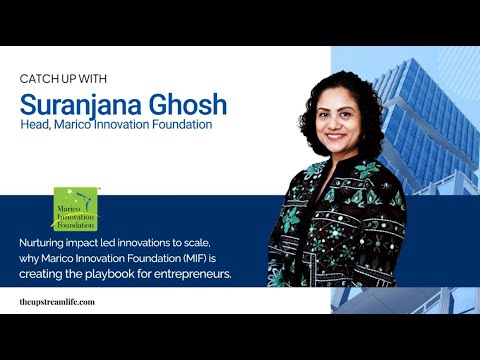
Head, Marico Innovation Foundation · with Vishal Krishna
The accelerator that writes no cheques — episode thumbnail
1:04:57
Said in this episode
▶ 14:50
1–2%
Startups that clear Scale Up diligence
The selection rate across everything the foundation assesses — a process she says mirrors what any other VC firm would undertake.
▶ 51:25
100–150
Startups scouted and evaluated per month
Against roughly one onboarding a month after diligence; rejected founders are told which parameters they missed and can come back years later.
▶ 13:48
₹1cr → ₹100cr
The Scale Up revenue corridor
Entry is around ₹70 lakh to ₹1 crore of annual revenue run rate; the target is ₹100 crore over three to five years of handholding.
▶ 9:51
65+
Innovations recognised by the awards
Across nine editions of the Innovation for India Awards, drawn from 500 to 700 entries each and six or seven winners per edition.
▶ 33:33
90,000+
Startups in India today
Against roughly 2,200 in the foundation's database in 2013, with a little over 100 unicorns — figures she caveated on air, and many companies are not even registered.
▶ 48:11
6 t/hour
AI waste-sorting throughput
A portfolio startup's AI vision model sorting plastic waste by colour and brand packaging; she hedged the number herself with 'if I'm not mistaken'.
The brief

The argument in sixty seconds

Suranjana's claim is that India's innovation problem was never a shortage of ideas but the absence of anyone willing to carry one from ₹1 crore of revenue to ₹100 crore. The Marico Innovation Foundation — set up in 2003 by Harsh Mariwala, before CSR existed as a concept in Indian law — screens harder than a venture fund and then refuses the venture fund's instruments: 100 to 150 startups scouted every month, one to two percent selected, roughly one onboarded, and no equity, no capital, all of it pro bono. Its definition of innovation is deliberately narrow — technology whose nearest competitor is about two years behind. What it lends instead is Marico's own bench: procurement, compliance, logistics, distribution, HR, matched one business challenge at a time, six to nine months a challenge, three to five years a company. Thirty-plus innovations later, two have crossed ₹100 crore to become what the foundation calls soonicorns, Atomberg and S4S Technologies. Along the way she draws the line the ecosystem keeps smudging — jugaad is a quick, opportunistic, short-lived response; innovation is defensible, tested and slow — insists compliance and sustainability are never retrofitted, and points at the plastics playbook built with the Indian Institute of Science after finding a literature full of the problem and empty of the fix. The stakes: with 90,000 startups, a 90% failure rate and an even higher one for first-of-its-kind technology, almost nobody funds the toddler stage.

Worth your time if you are

Deep-tech founders stuck between ₹1 crore and ₹100 crore of revenue
CSR and foundation teams designing a non-dilutive programme
Corporate sustainability heads facing EPR deadlines
Anyone who still uses jugaad and innovation interchangeably
Impact investors who distrust valuation as a scorecard
Episode map

Where the conversation travels

Every block is a chapter, coloured by what it's about. Click any of it to jump straight to that minute on YouTube.

01Cold open: inspire, involve, impact 0:00 Vishal introduces the head of the Marico Innovation Foundation and the three pillars behind its work, then asks her to tell the story in two halves — pre-Covid and post-Covid. 02From L'Oreal and Kellogg to Dasra 1:01 Twenty years across for-profit and nonprofit: brand and product management at L'Oreal and Kellogg, media and digital marketing at CNBC TV18 and BBC World News, then a personal campaign for disability rights at Indian airport security and six years in social impact at Dasra and Power for All. 03A 20-year foundation nobody talks about 3:04 What drew her to the job was the puzzle of a foundation doing two decades of impactful work almost unnoticed — a reflection, she says, of a chairman who deliberately declines the credit. 04Philanthropy before CSR was law 4:49 The foundation refuses to stay in its 2019 mould, and traces back to 2003, when Harsh Mariwala started it as Marico's philanthropic arm before CSR existed in Indian legalities and innovation was still used interchangeably with jugaad and invention. 05Eight months to pick seven winners 8:35 The Innovation for India Awards, launched in 2006 and now nine editions old, run an eight-month evaluation with two independent juries and on-ground diligence to cut 500 to 700 entries down to six or seven winners — 65-plus innovations recognised so far, across every sector. 06Dozee, and the dog on the blanket 10:51 An under-mattress sensor turns any bed into a monitored one, an idea born when the founders' motion sensor picked up their dog sitting on a rug — and the awards exist partly to give such origin stories a stage. 07Scale Up: no equity, no cheque 12:38 The 2016 Scale Up programme takes startups at ₹70 lakh to ₹1 crore of revenue and handholds them toward ₹100 crore over three to five years, one business challenge at a time, selecting only 1 to 2% of what it assesses across plastics waste, food and agritech, and clean tech. 08Does impact start on day one? 16:18 Vishal asks whether founders arrive with impact built in; she splits them into those whose idea was born of a personal shock, like a diabetes-detection startup founded after a family death, and those who discover livelihoods and stability along a purely commercial journey. 09Why plastics, and why now 19:53 Working with the Indian Institute of Science and a consulting partner through 2021 and 2022, the foundation picked plastics because the sector sat at the cusp of breakthrough adoption — and because Marico, as a consumer brand, puts plastic into the environment itself. 10EPR, flexibles and edible packaging 23:20 Launched in January, the report profiles 15 startups from high-speed AI sorting to recycling multi-layer packaging and seed-based packaging you can eat, alongside global corporate case studies and policy benchmarks aimed at FMCG brand owners now facing EPR rules. 11No side door, no retrofitted compliance 26:56 Mentorship, market access and capacity building exist only inside Scale Up, and challenges get sequenced by dependency before a Marico mentor is matched to the one that unblocks the rest — because compliance is part and parcel of the business, never bolted on later. 12From 2,200 startups to 90,000 31:32 The ecosystem's decade in numbers and in culture — a little over 100 unicorns, startups as a word that reached Bollywood — plus the Innovate to Beat Covid challenge that funded Indian-made ventilators, PPE and masks at global standards, one of which found an export market. 13Jugaad is not innovation 37:50 Her cleanest argument: jugaad is opportunistic, handy and short-lived, while true innovation is long-term, scalable, cost-effective and defensible, built by first principles and a build-test-repeat loop — and the model only works with founders coachable enough to be pulled back on track. 14AI without the doom and gloom 45:25 Rather than fear replacement, she points to a portfolio startup whose AI vision model recognises waste by colour and brand packaging and sorts it at roughly six tonnes an hour — scale no eight-hour human day can reach. 15One onboarding a month 50:37 Thirty-plus innovations supported since 2016 and two past ₹100 crore, from 100 to 150 startups scouted a month; rejections come back with the parameters that were missed, and the entire mentorship stays pro bono, no equity, no capital. 16Resilience, ikigai and jazz 55:30 The year ahead in plastics, clean tech and agritech gives way to cancer at 18, an amputation she volunteered for at 22, adversity as an opening to opportunity, and a closing run through Ikigai, contemporary Indian art and Coltrane.
Takeaways

Ideas to carry out of this hour

01

The unicorn that counts is ₹100 crore of revenue

The foundation borrows the ecosystem's vocabulary and quietly changes the unit. A soonicorn here is not a valuation waypoint but a company that has crossed ₹100 crore of annual recurring revenue, reached over three to five years from an entry point of roughly ₹70 lakh to ₹1 crore. Thirty-plus innovations have been through Scale Up since 2016; two — Atomberg and S4S Technologies — are across the line and about 10 to 12 more are in the pipeline. Vishal's approval is the tell: it is the revenues that matter, not the valuation.

02

Screen like a VC, then refuse the VC's instruments

The diligence, she says, is exactly what any other VC firm would undertake, and only 1 to 2% of assessed startups get in — 100 to 150 scouted in a month, roughly one onboarded. But the foundation takes no equity, puts no capital on the table, and does the mentorship entirely pro bono. The filter is a deliberately narrow definition of innovation: technology hard enough to replicate that its closest competitor is about two years behind.

03

Jugaad is a quick response; innovation is a defensible one

Jugaad, she argues, is what you assemble from whatever is lying around — opportunistic, handy, immediate, short-lived — and using it as a synonym for innovation does the second word a disservice. True innovation is long-term, highly scalable, cost-effective and defensible: it survives permutations, combinations and any round of questioning, and it demands research, prototyping and a build-test-repeat loop before the first workable version exists. The trade is speed for durability, and she thinks the longer game pays better.

04

Mentorship, not money, is the scarce input at the toddler stage

What Scale Up actually transfers is Marico's own bench plus a network of domain experts — procurement, compliance, logistics, distribution, HR — matched one at a time to a specific business challenge. Each challenge takes six to nine months to define, ideate, implement, test and then measure against revenue and growth, and fifteen competing needs get sequenced by dependency rather than by loudness. Her reasoning: roughly 90% of startups fail, first-of-its-kind innovation fails at an even higher rate, and almost nobody supports companies at the early-revenue, toddler stage.

05

The plastics literature described the problem and skipped the fix

Built with the Indian Institute of Science and a consulting partner through 2021 and 2022 and launched in January, the report exists because everything already published explained the mess and almost nothing explained how to solve it at scale. It profiles 15 startups across the waste-management spectrum — sorting at high speed with AI, recycling flexibles and multi-layer packaging, seed-based packaging you can eat — plus global corporate case studies and policy benchmarks India could adopt. The position is unsentimental: abolishing plastic is not a solution when it is in your spectacles and your shirt buttons; managing the waste is.

06

AI earns its keep where human hours run out

Her answer to replacement anxiety is throughput. One of the foundation's plastics startups built a proprietary dataset and an AI vision model that recognises waste by colour and by brand packaging — a blue Parachute coconut oil bottle, in her example — and sorts it at around six tonnes an hour. A person delivers at an optimal level for about eight hours and assimilates at a fixed rate; the model keeps improving as more data is fed in. Point AI, she argues, at the large, scary problems that stayed unsolved because they needed human intervention at impossible scale.

07

Compliance is a sequence, not a hire

Asked whether startups now need sustainability and compliance officers, she reframes the question: compliance, procurement, logistics and distribution are facets of taking a product to market, not departments to bolt on. The foundation's portfolio manager sits with the team, maps the competing needs into their dependency order, and pulls in a mentor for the one that unblocks the rest. The line worth keeping is hers: it shouldn't be retrofitted.

The numbers, drawn

What the episode measures

Every figure below was said on air — timestamps included, caveats kept.

Conversation share

portion of the hour spent on each theme
Impact & outcomes · 26%Climate & energy · 18%Product strategy · 14%Founder journey · 13%India macro · 11%AI & machine learning · 10%
Impact & outcomes26%
Climate & energy18%
Product strategy14%
Founder journey13%
India macro11%
AI & machine learning10%
Computed from the chapter map of this episode.

A decade of Indian startup formation

companies
Startups, 20132,200Startups, today90,000Of which unicorns100
As stated in conversation: roughly 2,200 startups in the foundation's database in 2013, '90,000 plus' today, and 'a little over 100' unicorns — both speakers noted many companies never reach the registry, so the base is soft.▶ 33:33

Seven years of the Scale Up programme

startups
Supported since 201630In the ₹100 cr pipel11Past ₹100 cr2
As stated in conversation: '30 plus' innovations supported since the 2016 launch, 'about 10 to 12' well on the way (midpoint shown), and two soonicorns past ₹100 crore — Atomberg and S4S Technologies.▶ 51:06
Worth keeping

Lines that stay

How can a foundation have been around for 20 years and have done such impactful work, and very few people are actually talking about it?

— Suranjana ▶ 3:57

Saying that you can do away with plastic is really not a solution — then I wouldn't be wearing the spectacles I'm wearing, we wouldn't have buttons on our clothes.

— Suranjana ▶ 24:50

I don't think compliance is something that needs to be looked at separately today. It's part and parcel of what you do, and it shouldn't be retrofitted.

— Suranjana ▶ 31:16

True innovation is long term, highly scalable, cost effective — and defensible. It will stand the ground of many different permutations and combinations, any round of questioning.

— Suranjana ▶ 40:20

I've lived my life very much with the philosophy of adversity being an opening to opportunity.

— Suranjana ▶ 58:38
Clips that travel

Short on time? Start here

Founders weighing whether an awards process is worth eight months

Eight months, 700 entries, seven winners

The full machinery of the Innovation for India Awards — two independent juries, on-ground diligence — and the under-mattress patient sensor discovered on a dog's blanket.

8:35 → 12:38 · 4 min ▶ Watch clip
Deep-tech founders stuck below ₹10 crore of revenue

The accelerator that writes no cheque

Scale Up's mechanics: ₹1 crore in, ₹100 crore out, 1 to 2% selection, no equity — and why the foundation counts revenue instead of valuation.

12:38 → 16:18 · 4 min ▶ Watch clip
Corporate sustainability heads facing EPR deadlines

Why an FMCG foundation wrote a plastics playbook

How the sector was chosen, what the report actually contains, and the case against pretending plastic can simply be abolished.

19:53 → 25:21 · 5 min ▶ Watch clip
Anyone who uses the two words interchangeably

Jugaad is not innovation

The sharpest definition in the episode: opportunistic and short-lived versus defensible, tested and slow — with first principles and build-test-repeat as the method.

37:50 → 42:40 · 5 min ▶ Watch clip
Anyone rebuilding a career after a life-altering setback

Adversity as an opening to opportunity

Cancer at 18, an amputation she volunteered for at 22, and why she believes the alternative would have left her one-dimensional.

56:35 → 1:00:25 · 4 min ▶ Watch clip
Glossary

The jargon, unpacked

Soonicorn
As the foundation uses it, a startup that has crossed ₹100 crore of annual recurring revenue — a revenue-based answer to the valuation-based unicorn.
Jugaad
A makeshift fix assembled from whatever is at hand; long used in India as a synonym for innovation, which the guest argues it is not.
Innovation for India Awards
The foundation's biennial award, launched in 2006, recognising for-profit and not-for-profit Indian innovations after an eight-month evaluation with two independent juries.
Scale Up programme
The foundation's no-equity, no-capital acceleration track, launched in 2016: bespoke mentorship and network access for three to five years, aimed at ₹100 crore of revenue.
EPR
Extended Producer Responsibility — rules that make brand owners accountable for collecting and processing the packaging waste their products put into the market.
MLP
Multi-layer packaging: flexible plastic bonded from several material layers, cheap to produce and notoriously hard to recycle — one of the hard problems the plastics report targets.
SDGs
The UN Sustainable Development Goals; the foundation looks for innovations whose impact links back to them in some form.
Connections

If this resonated, go here next

Full transcript

The whole conversation, searchable

256 segments

Auto-generated captions, lightly cleaned. Click a timestamp to open that moment on YouTube.