Episode 96 · Consumer · 48 min

Digitally assisted, not digital

E-commerce is still only about six per cent of Indian retail — and V3 Ventures' reading is that this is the least interesting number in the room, because discovery has already gone online almost everywhere. The proof is a family watch-and-jewellery business with a ₹10 lakh average order value that now books 22% of sales digitally, most of it Zoom appointments that finish at the counter.

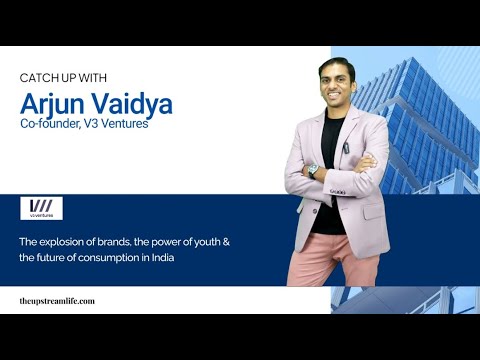
AV
Arjun Vaidya
Managing Partner, V3 Ventures · with Vishal Krishna
Digitally assisted, not digital — episode thumbnail
48:08
Said in this episode
▶ 6:09
6-7%
E-commerce share of Indian retail
Up from about 4%, with Vaidya expecting 15-20% over the next three to four years — general trade still carries the bulk of consumption.
▶ 4:38
30,000+
D2C brands in India, by his count
Against a widely quoted forecast of 6,000 brands by 2024 and a narrative number of 10,000; he treats the 1,250 brands that have taken his cohort as a sample of a much larger base.
▶ 13:15
22%
Family jewellery business now digital
Digital or digitally assisted sales at a luxury watch and jewellery house with a ₹10 lakh-plus average order value — of that 22%, only 10-15% is actually paid online.
▶ 20:51
5-6,000
Ads the average customer sees
His figure for daily ad exposure, and the reason he frames brand as the ability to cut through clutter with a unique experience rather than more impressions.
▶ 21:35
10 million
Customers in a 'very small' Indian niche
Addressable customers available to a narrow niche in a country this size — the population of a European nation, and enough for ₹100-200 crore brands.
▶ 28:47
100
Angel cheques before the fund
Written over roughly two and a half years after selling his company, starting from six to twelve hours a week of pro bono founder help.
The brief

The argument in sixty seconds

Vaidya's claim is that India's e-commerce debate keeps asking the wrong question. Online is barely six per cent of Indian retail — up from four, seven on a generous count — and general trade still moves the bulk of the country's goods, yet almost every purchase now passes through a phone before it happens. He calls the result digitally assisted commerce, and his evidence is his own family's luxury watch and jewellery business, average order value ten lakh rupees and up, which now books 22% of sales digitally even though only a tenth of that is actually swiped online; the rest is Instagram Reels, virtual appointments and then a walk into the store. From there the argument widens. The narrative counts six to ten thousand D2C brands; he thinks the real number is past thirty thousand, and the 1,250 brands that have come through the weekend cohort he runs with his wife are only the sliver that showed up. That density has eaten the margin for error — he had a year to learn performance marketing while building Dr. Vaidya's, and reckons a founder today gets three months, because D2C has become a technical business of processes, dispatch times and listings rather than a story about a product. And the customer has changed shape: Gen Z is not fickle but fiercely, publicly loyal, an Indian niche holds ten million addressable customers — the population of a European country — and aspiration now travels through gateway brands, because the kid who has seen the ₹1 lakh sneaker on Instagram buys the affordable lookalike first and the real thing a decade later.

Worth your time if you are

D2C founders who mistake a website for a channel
Brand marketers trying to read Gen Z without guessing
Legacy retailers whose loyal customers are all over 60
Early-stage consumer investors sizing Indian niches
Anyone who thinks 'online' and 'e-commerce' mean the same thing
Episode map

Where the conversation travels

Every block is a chapter, coloured by what it's about. Click any of it to jump straight to that minute on YouTube.

01Cold open: a word imported from the West 0:00 Vishal introduces an operator turned fund manager, the two men trade memories of a 2018 hotel-lobby interview and the only live panel Vishal has ever done with his wife, and land on how D2C went from a mythical American term nobody in India would say out loud to the default vocabulary of consumer building. 02Valuing Myntra, and the fad that wasn't 2:04 As the youngest member of a private equity team, Vaidya was handed the e-commerce beat and valued Myntra at the end of 2013 — while a very large offline retailer was telling everyone the whole thing was a fad — and what he saw in Myntra, Jabong, Pepperfry and BlueStone was accessibility for tier-2 and tier-3 consumers who had the aspiration and the money but no branded store. 03Thirty thousand brands, and Google Pay at home 4:22 The oft-quoted forecast of 6,000 Indian D2C brands is long dead — Vaidya puts the real count above 30,000, with 1,250 brands having passed through the weekend cohort he and his wife teach — and he reads the shift through his own parents, a mother now offended when a shop won't take Google Pay and a father placing 50 to 70 Amazon orders after a lifetime of never shopping online. 04Six per cent online, all of it researched 5:53 Both men admit they drank the post-COVID Kool-Aid: general trade is still the strongest retail channel in India and e-commerce has only moved from 4% to 6 or 7% of retail — heading to 15-20% in three or four years — but travel is effectively all online, apparel and electronics are enormous, and every category now runs its research online, so a TV gets inspected in a store and price-checked on Flipkart before it is bought. 05The cohort, and the vanished margin for error 8:40 Because nobody could answer his questions while he was building Dr. Vaidya's, the eight-week programme he teaches skips the founder-journey theatre for specifics — warehousing, website conversion, SEO, retention rates, Amazon listings, logistics, culture — and the reason it exists is competition: he had a year to learn performance marketing, a founder today gets three months, and over a hundred ayurveda D2C brands have already taken his course. 06Ten-lakh watches, sold on Zoom 11:24 His family's luxury jewellery and watch house had no digital strategy and a customer base the age of his parents, so he ran the experiment anyway: Instagram Reels, virtual appointments and online discovery now drive 22% of a business whose average order value crosses ₹10 lakh, even though only 10-15% of that is actually paid online — proof of a spectrum running from wholly offline through omnichannel to wholly online, with involvement deciding where a purchase sits. 07Don't call me: bots, Kyra, and the invoice 15:00 Vaidya wants to chat, not talk, and suspects the generation below him will happily transact with an AI — his exhibit is an Instagram follower with 200,000 followers billed as India's first virtual influencer — while Vishal's counter-example is an EV brand that changed his name on an invoice over WhatsApp, the kind of frictionless experience that people repeat to each other. 08The Akasa DM and the loyalty nobody expects 17:16 One grumbling Instagram story about an early Akasa flight produced a DM, a call from the head of customer relationship management and a permanent change of mind — and Vaidya uses it to attack the lazy story about Gen Z, arguing that these customers are not fickle but fiercely public in their loyalty, as when a semi-permanent hair colour brand's fans swarmed to defend it after a Shark Tank negotiation backlash. 09A niche the size of a European country 20:20 The average customer now sees five or six thousand ads a day and some of Gen Z is logging off from the overstimulation, but the survivors are opinionated — and in a country this large a very small niche still means ten million addressable customers, the population of a European nation, which is how a brand shipping Korean-language stickers to BTS fans builds ₹100-200 crore in sales. 10Friends under 25, not mentees 23:08 His method for reading microcultures is to keep genuine friendships with people below 25 rather than collect mentees — the 19-year-old he plays squash with told him Facebook is extinct except for games, and Vishal counters with a landlord's daughter in a farming town 60 km from Bangalore who has learnt to sing in Korean and buys Korean products on every city trip. 11Indian Chinese, makhani pizza, ₹10 chips 25:42 Culture blends in both directions — Kolkata's Chinese settlers invented a cuisine now sold back to Americans, and the pineapple pizza his father found offensive in 1996 became the chicken makhani pizza — while the other half of Indian consumption refuses to move: chips still cost ₹10, a cashless vending machine he saw at an airport carries branding that looks unchanged since 1960, and Coca-Cola could never manage to kill Thums Up. 12From operator to fund manager, via LinkedIn 28:13 After selling the business he gave founders six to twelve hours a week pro bono, turned that into roughly 100 angel cheques in two and a half years, and then took a cold LinkedIn connection from a Belgium-based, single-LP consumer investor — 25 years in the category, 11 in India, backer of Sula, Epigamia and Purplle — through four months of calls, a Spain offsite with 50-60 colleagues and a December 2021 board presentation that allocated the capital. 13Disruption outside the top five cities 30:55 The part of the job he finds most exciting is what is being built in Ahmedabad, Surat, Indore, Jaipur and Lucknow — less attrition, lower cost, more focus, less travel — and the portfolio reflects the same appetite for consumer plus technology, from Kuku FM to a regional-language upskilling platform, a health-tech riding the ABHA wave, a zero-sugar ice cream brand and an asset-light QSR house of brands. 14The Nike you cannot afford yet 33:11 Vaidya's next-decade thesis is that aspiration gets more specific as it grows, and the mechanism is proximity: he never knew where Sachin holidayed, while today's fan sees every airport outfit and dressing-room frame, so a teenager who covets a ₹1 lakh sneaker buys a ₹3,000 lookalike as a gateway — the same impulse that made someone screenshot a blurry watch off a Bollywood chat show and demand it from his brother's store. 15Don't build a brand for yourself 36:50 The commonest consumer mistake is founding a business around what you and your friends already consume — Vaidya is an investor in Jimmy's Cocktails and, being entirely sugar-free, has never tasted one — and after describing his own D2C podcast as paying it forward he names the three things that derail founders: impatience, shortcuts and unsustainable growth, plus the ego that arrives when the cycle turns good. 16Fital India, and the game to lose 40:48 Build a good business and the exit options find you, he argues, before working through practical advice — a chief-of-staff role under a great founder, small incremental digital spends, manufacturing partners big enough to be good but not so big they ignore you — and closing on the physical-plus-digital blend some call fital, the DigiLocker and Aadhaar rails that get him from car to airport gate in ten minutes, and the once-only chance India has as capital and factories rotate away from China.
Takeaways

Ideas to carry out of this hour

01

E-commerce is 6% of retail and 100% of research

Vaidya's correction to his own post-COVID enthusiasm is blunt: general trade still carries the bulk of Indian consumption and online has crept from 4% to 6 or 7% of retail, with 15-20% a three-to-four-year story rather than a done deal. What has already gone fully digital is discovery — he and Vishal both describe standing in an appliance store checking Flipkart prices and reviews before buying the television in front of them. The operating implication is that even a B2B or offline business now needs a findable Google presence, a website and an Instagram page as bare minimum hygiene.

02

Digitally assisted is the real Indian channel

His family's watch and jewellery business sells at average order values above ₹10 lakh and had no digital strategy at all, on the reasoning that nobody buys a ₹50 lakh watch on a website. Twenty-two per cent of that business is now digital or digitally assisted, but only 10-15% of the 22% is actually swiped online; the rest discovers on Instagram, books a Zoom appointment and closes in the store. The strategic point is that the digital channel's job is not always the transaction — and that involvement level, not category, decides where on the offline-to-online spectrum a purchase settles.

03

The margin for error is gone: D2C is now technical

Vaidya built Dr. Vaidya's on performance marketing alone and admits brand came late, which worked because he was effectively the only ayurveda brand a searching customer could find. Over a hundred ayurveda D2C brands have since taken his cohort, and the learning window has compressed with the competition: a year to figure out Shopify, marketplaces and paid acquisition then, roughly three months now. What he calls a technical business is not product technology but process — dispatch speed, warehousing, listing quality, customer experience, launch cadence.

04

Gen Z is not fickle — it defends brands in public

The received narrative says young Indian consumers are disloyal and always switching; Vaidya argues they simply expect a different experience and are unusually vocal once won. When a semi-permanent hair-colour brand was attacked online for negotiating hard on Shark Tank, its own customers flooded the comments to defend it and flipped the sentiment — behaviour, he notes, that our generation would never volunteer for a brand in trouble. Akasa's response to his complaining Instagram story is the mirror image: one DM and one phone call from the CRM head bought a permanent advocate, and the retelling on this podcast.

05

An Indian niche is the size of a European country

In a market this large, a segment that looks impossibly narrow still leaves ten million addressable customers — the population of a mid-sized European nation — and digital lets a brand reach them without ever building distribution. That is why he expects niche-looking businesses to reach ₹100-200 crore in sales, and cites a brand that started shipping stickers printed in Korean because its Gen Z customers are BTS fans who actually read them. The corollary for older operators: subcultures you find baffling are exactly where the next large businesses are hiding.

06

Aspiration travels through gateway brands

Vaidya's generation knew three facts about their cricketing idol; today's teenager sees the airport outfit, the holiday, the dressing room and the watch on a chat show, so aspiration is far closer and far more specific. But proximity is not affordability: the fan who wants a ₹1 lakh sneaker buys the ₹3,000 brand with the same silhouette first. He frames these cheaper brands not as knockoffs but as the on-ramp — the customer eventually gets to the aspirational purchase, and the gateway brand is how they travel.

07

You cannot research a subculture you refuse to befriend

His method for staying current is a set of real friendships with people under 25 that he insists are not mentorships — equal relationships with a two-way flow of information, from which he learns what they eat, wear, watch and expect brands to say. The 19-year-old he plays squash with told him Facebook is extinct except as a games console with three friends attached. The founder-facing warning is the same idea inverted: build for your own consumption pattern and you will build for a market of one, which is why he happily invests in a cocktail brand whose product he, being sugar-free, has never tasted.

The numbers, drawn

What the episode measures

Every figure below was said on air — timestamps included, caveats kept.

Conversation share

portion of the hour spent on each theme
Consumer India · 26%D2C & commerce · 22%Marketing & brand · 18%Venture capital · 12%Founder journey · 9%Sales, GTM & growth · 7%
Consumer India26%
D2C & commerce22%
Marketing & brand18%
Venture capital12%
Founder journey9%
Sales, GTM & growth7%
Computed from the chapter map of this episode.

Online is still a sliver of Indian retail

% of retail
A few years ago4Today6In 3-4 years (his es15
As stated in conversation: e-commerce 'was at 4, now it's at 6, some people say 7%', and 'this number will 15, 20 over the next 3-4 years' — lower bounds shown for the current and forecast figures.▶ 6:09

How many D2C brands India actually has

brands
Forecast of 6,000 by6,000Number in the narrat10,000Vaidya's estimate30,000
As stated in conversation — a report predicted 6,000 brands by 2024, the commonly cited range is 6,000-10,000, and Vaidya argues it is 'well above 30,000' on the D2C definition; the 1,250 brands through his cohort are cited as the sample behind that hunch.▶ 4:38
Worth keeping

Lines that stay

It took me one year to figure out how performance marketing works, Shopify, WooCommerce, whether to list on Amazon. Today you get three months. D2C is now a technical business — if you don't get the basics right, you're done.

— Arjun Vaidya ▶ 10:39

These customers are fiercely loyal. If they like a brand, unlike us, they will go on social media, they will talk about it, they will comment on the brand's posts.

— Arjun Vaidya ▶ 19:22

If you are in a niche you have 10 million addressable customers. A very small niche — 10 million addressable customers is the size of countries in Europe.

— Arjun Vaidya ▶ 21:35

The next decade is a decade for brands. The aspiration is there, and as aspiration builds, consumers will get more and more nuanced and specific in the type of consumption.

— Arjun Vaidya ▶ 33:11

Impatience, shortcuts and unsustainable growth. A brand is not built in six months or three months — a brand is built over time, and consumer trust is built over time.

— Arjun Vaidya ▶ 39:07
Clips that travel

Short on time? Start here

Founders who think 'online' means a marketplace listing

Six per cent online, a hundred per cent researched

The corrective at the heart of the episode: general trade still wins the transaction while every category has already lost the research to a phone.

5:53 → 8:40 · 3 min ▶ Watch clip
Legacy retailers whose loyal customers are all over 60

Ten-lakh watches, sold on Zoom

A live experiment on a luxury jewellery house — 22% digitally assisted, Instagram Reels to virtual appointment to counter — and the involvement spectrum it implies.

11:24 → 15:00 · 4 min ▶ Watch clip
Brand marketers trying to read Gen Z without guessing

The Akasa DM, and a niche the size of Europe

The best stretch on customer behaviour: one airline DM that flipped a critic, Gen Z fans defending a brand mid-pile-on, and why ten million people is a small niche here.

17:16 → 23:20 · 6 min ▶ Watch clip
Exited founders considering the investing side

From operator to fund manager, via LinkedIn

The unglamorous route: pro bono hours, a hundred angel cheques, a cold LinkedIn connection, a Spain offsite and a board presentation that released the capital.

28:13 → 30:55 · 3 min ▶ Watch clip
Consumer founders pricing for a young market

Aspiration and the gateway brand

Why proximity to idols has changed what teenagers want, and why the ₹3,000 lookalike is an on-ramp to the ₹1 lakh sneaker rather than a substitute.

33:11 → 36:10 · 3 min ▶ Watch clip
Glossary

The jargon, unpacked

D2C
Direct-to-consumer — a brand that owns its own sales channel and customer relationship rather than selling through distributors; a term Vaidya says was mythical and imported in 2016-17 and is mainstream now.
GT (general trade)
India's traditional network of kirana and independent stores, as opposed to modern trade or e-commerce — still, on his numbers, where the bulk of Indian consumption happens.
Digitally assisted sale
A purchase discovered, researched or negotiated online but completed offline — the 22% of his family's jewellery business that is digital even though only a tenth of it is paid for on a website.
Fital / omnichannel
The physical-plus-digital blend both men expect to win — online membership and facial-recognition entry to a badminton club where the badminton is still played in person.
Performance marketing
Paid, measurable customer acquisition on channels like Meta and Google — the engine Vaidya built his ayurveda brand on before brand-building, and the first skill a new D2C founder now has three months to learn.
AOV (average order value)
The average value of a single order — ₹10 lakh and above in the family watch and jewellery business, which is why nobody expected any of it to go digital.
Gateway brand
An affordable brand that delivers a similar experience to an aspirational one, letting a customer travel toward the ₹1 lakh sneaker via a ₹3,000 version instead of dropping out.
V3 Ventures
The seed-to-Series-A consumer fund Vaidya runs — named on air as Verlinvest Ventures, the India early-stage arm of a Belgium-based, single-LP consumer investor with 25 years in the category and about 11 in India.
Connections

If this resonated, go here next

Full transcript

The whole conversation, searchable

189 segments

Auto-generated captions, lightly cleaned. Click a timestamp to open that moment on YouTube.